Transforming Irish Business & Energy
Private Wires legislation isn't an abstract policy debate — it directly unlocks real, tangible opportunities for businesses of every size across Ireland. Below, discover how each stakeholder type benefits.
Primary Use Cases
Stakeholder-Specific Benefits
Householders
Reduces public grid congestion - very important as electricity market uses a type of dynamic pricing (very expensive periods push up average cost).
Taxpayers
€3 billion a year gain to the Irish economy generates a lot of taxes you don't pay.
All Electricity Users
Offers clear path to get Data Centres off the grid, keeping the FDI and jobs but not the high grid prices.
First Time Buyers
Property Developers can deliver new homes faster where ESB grid connections lag.
Solar Installers
Sell excess rooftop capacity to neighbours — unlocking larger, shared systems.
Commercial Owners
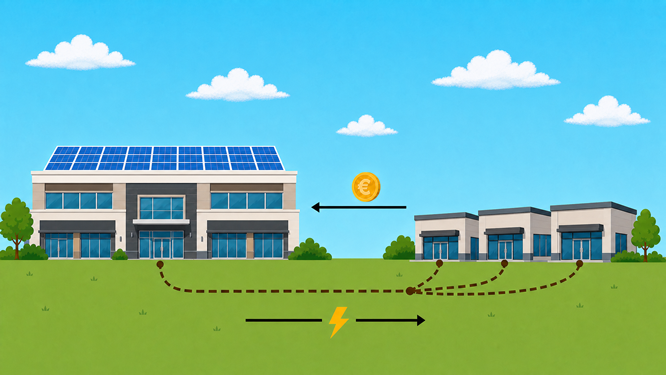
Supply your tenants directly with your own rooftop solar. Supply cheap zero carbon electricity.
EV Charging Providers
Deploy public and roadside charging with legal clarity. Local authorities empowered to authorise street-level installations.
Net Zero Pathway
Simplify your journey to Net-Zero. ISO-50001 and ISO-50100 deem Private Wires as true renewable sources of electricity, rather than power delivered over the grid even via a Power Purchase Agreement.
Benefits for the Wider Economy
- €3 billion / year in potential economic value (industry estimates), largely from offsetting fossil fuel imports.
- Lower average energy costs — more competition and less need for costly grid overbuild.
- Accelerated renewables rollout — thousands of new small projects unlocked.
- Faster housing delivery — grid connection delays no longer a blocker.
- Improved security of supply — distributed generation and local resilience.
- EU-compliant framework — aligns Ireland with Directive (EU) 2019/944 and the Citizen Energy Package.
Why This Matters
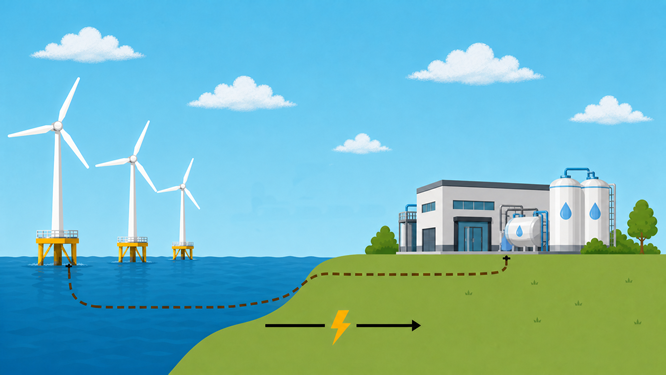
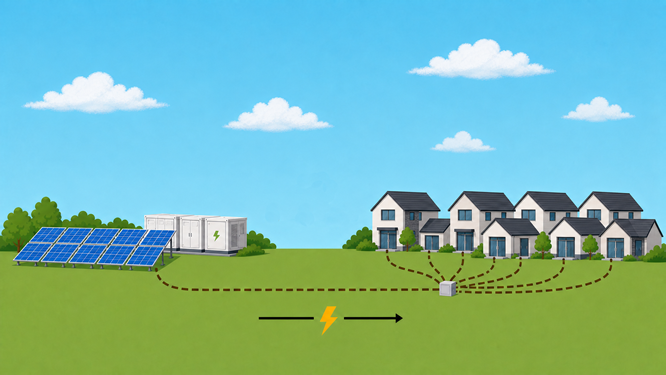
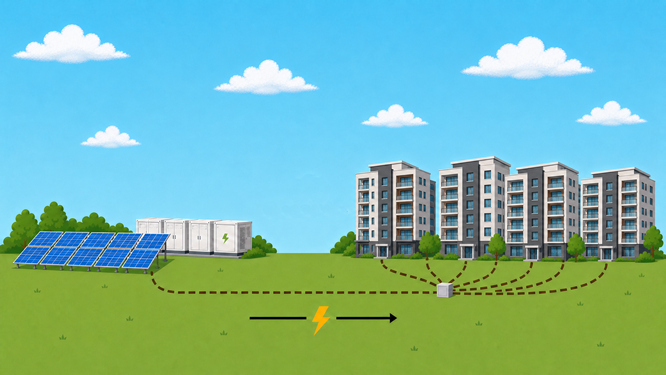
Private Wires legislation enables a fundamental shift in how Ireland produces and shares energy. Instead of all power flowing through centralised grid infrastructure. Communities, businesses and neighbours can share local renewable generation directly.
This isn't just economically compelling. It's exactly what EU energy law requires. The Citizen Energy Package recognises that end consumers have the right to produce, store, and share their own energy. Private Wires is how Ireland makes that a reality.
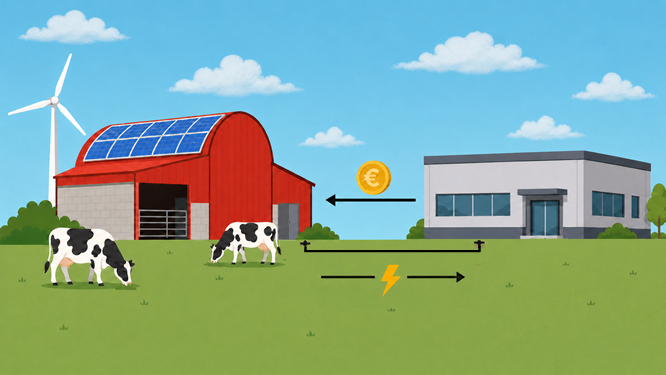
Roof space that is otherwise perfect for solar is not being utilised as there is a legal barrier to selling electricity to a third party. An organisation with a low load but with acres of south facing roof space does not have a mechanism to get fair market value for any solar generation.
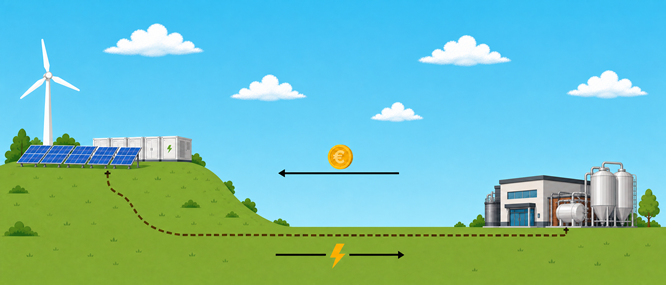
Ireland is facing enormous fines for not reaching 2030 decarbonisation targets, the shadow price of carbon being used by the SEAI is €7,500 per Tonne. There are GWs of renewable energy projects that don’t currently stack up commercially because of lack of access to offtakers. Legalising Private Wires will go a long way to helping unlock this value and reducing the shortfall in the 2030 decarbonisation targets.
Many shopping centres / office blocks will potentially have the opportunity to legally sub-meter electricity directly to tenants from a single office meter rather than the need for the tenants to have their own (more expensive) meter. This greatly simplifies building Greenhouse Gas (GHG) reporting which is key component of sustainability reporting mechanisms, and consequently the ability of the asset owner to raise green capital. This will be subject to licensing from the CRU, but it has the potential to free up some much needed grid capacity (e.g. along the Dublin docks).
Commercial buildings will have a market for new on-site renewable generation. Under current rules projects are sized to meet a landlord demand, which is generally only common area lighting and lifts. Changes to the Private wire rules will open up the opportunity to supply tenants on multiple floors with low cost (mostly solar) power and turn an empty roof space into a revenue generating asset.
For users that export Solar power currently, Private Wires offers an opportunity to increase the price obtained for exported power (approx. 25%).
It opens up business opportunities for renewable developers to connect multiple users in a business park to cheaper low-carbon power. If completely off grid (battery/HVO generator backup), this has the potential to dramatically speed up the delivery of (and scale of) renewable projects, while reducing costs for business park tenants.
It greatly simplifies Part L compliance for new build apartment schemes. A solar array / CHP sized to meet the minimum renewable generation of Part L is generally much larger than the landlord common area electricity requirements.
Ready to act?
The most important thing you can do is contact your local TD before the Second Stage vote. We've prepared sample letters for common business types and easy tools to find your representatives.